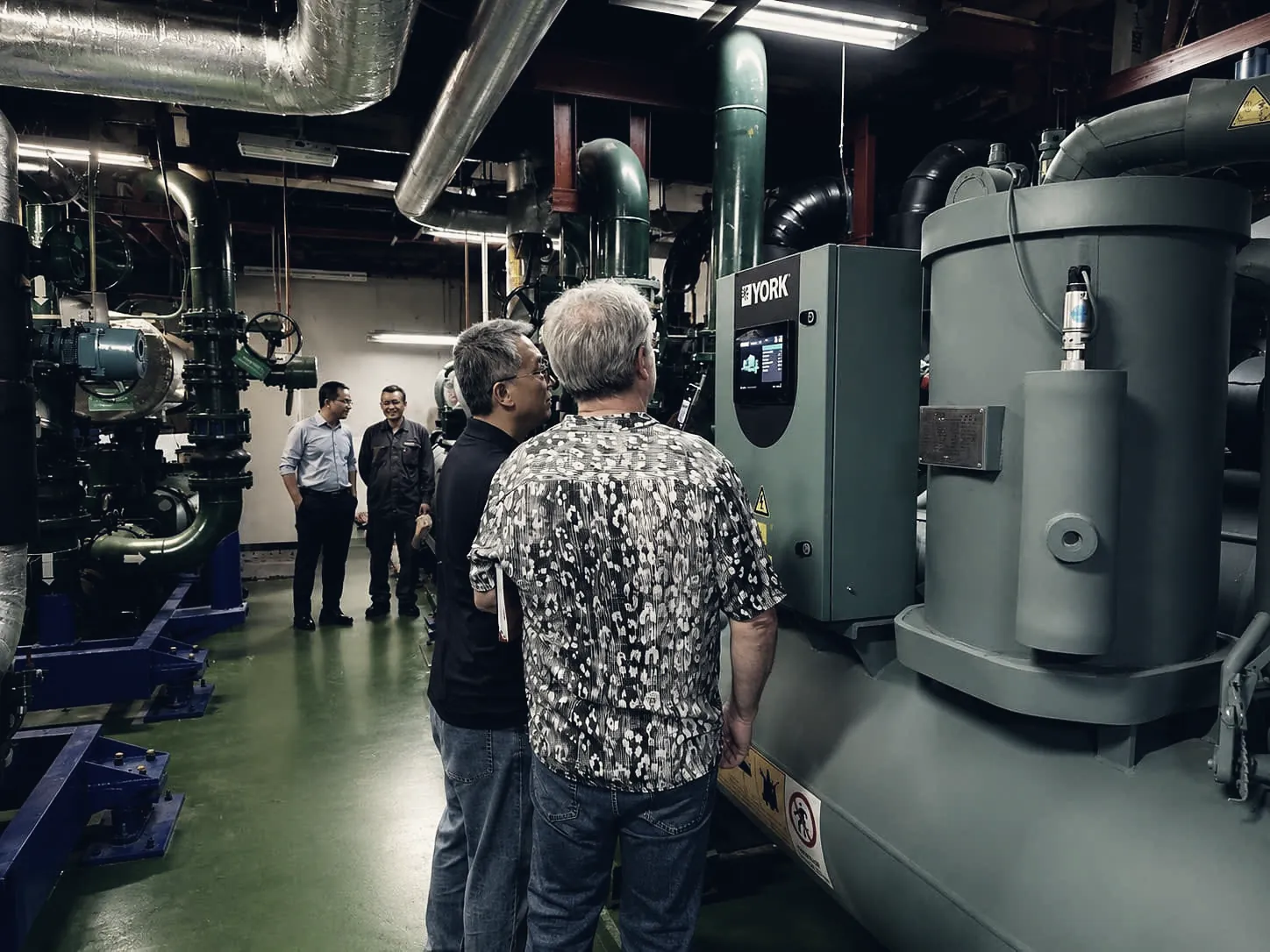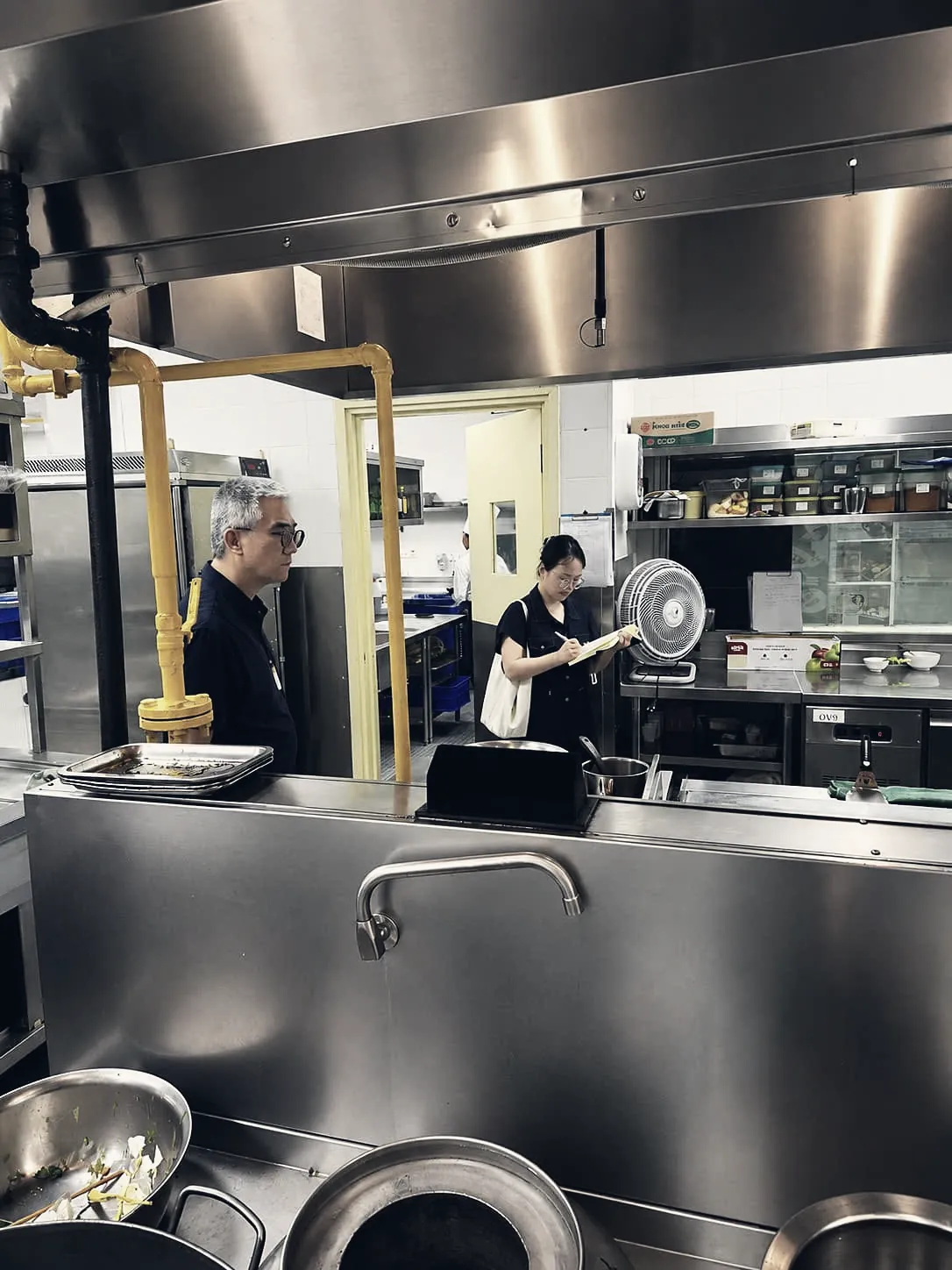



What is demand-controlled kitchen ventilation, and why are hotels switching?
Most hotel kitchen exhaust fans run at full speed from the first prep shift to the last clean-down, whatever is on the stove. Demand control slows them down when the cooking eases off, and the electricity bill follows.
DCKV team
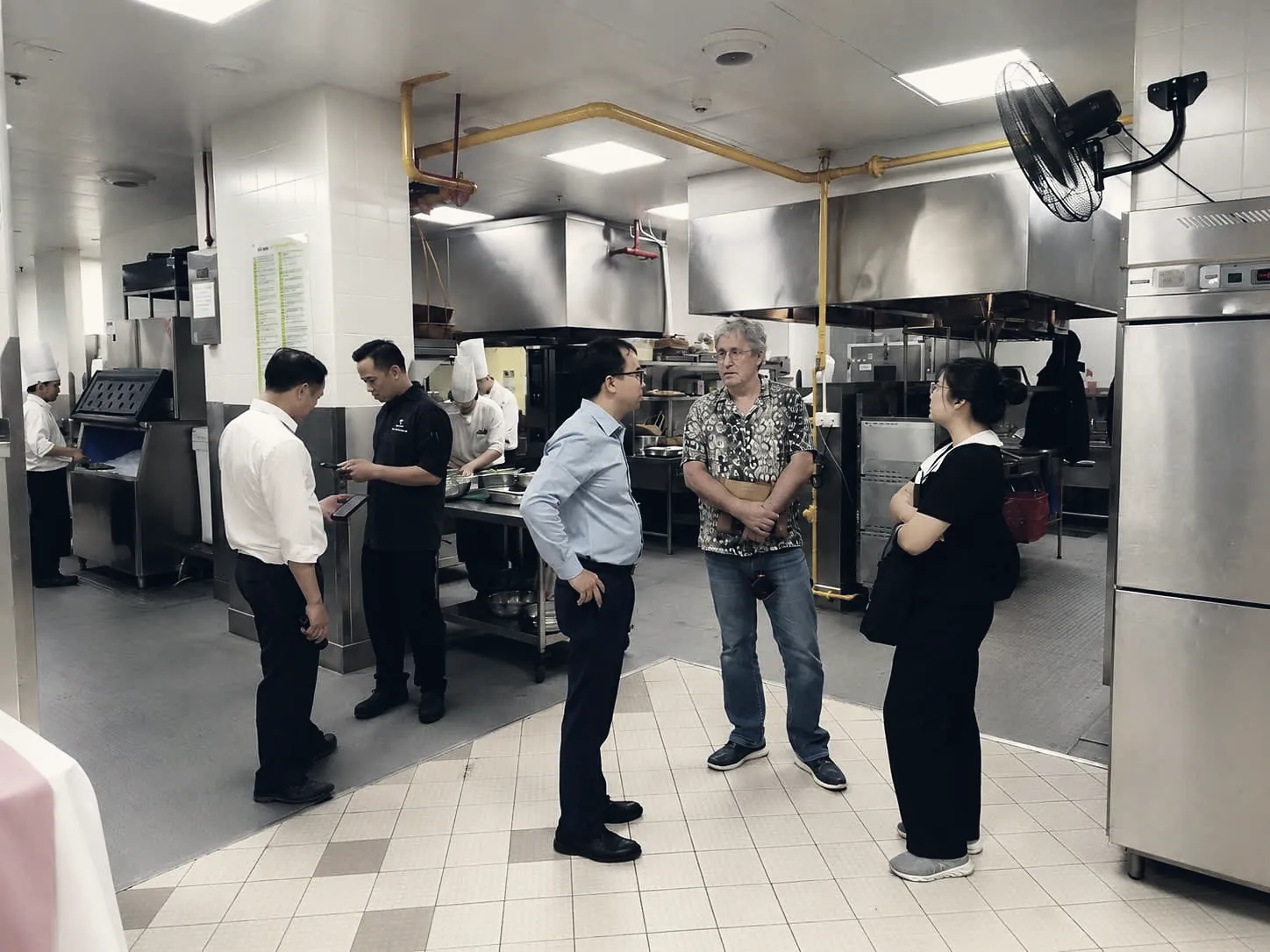
Walk into a hotel kitchen at three in the afternoon. Lunch service has finished, dinner prep hasn't really started, and a couple of cooks are portioning vegetables at a steel bench. Above the cooking line, the exhaust fans are running exactly as hard as they were at half past twelve, when every burner was lit.
Most commercial kitchen ventilation works this way. The exhaust is sized for the busiest moment of the day, a full line of woks and grills, and then it runs at that rate for every hour the kitchen is open. Demand-controlled kitchen ventilation (DCKV) keeps the sizing and lets the fans run only as hard as the cooking needs at that moment.
How DCKV works
A DCKV system adds sensors, a controller and variable-frequency drives to the hood and fans a kitchen already has.
An optical sensor across the hood measures smoke and grease vapour, and a temperature probe measures heat in the exhaust stream. Together they show how hard the line is cooking right now, which a timer or a fixed schedule can't tell you.
The controller reads every sensor continuously and works out the airflow each hood needs. Variable-frequency drives (VFDs) on the exhaust and make-up air fans then set the speed. When a wok fires, the fans ramp up within seconds. When the line goes quiet, they ease back to a minimum speed set during commissioning, so the hood always keeps some extraction.
The make-up air fan has to follow the exhaust. Every cubic metre the hood pulls out has to be replaced, and if the supply keeps running at full speed while the exhaust slows down, the kitchen goes into positive pressure and pushes heat and cooking smells into the corridors and dining rooms. DCKV slows both fans together to keep the balance.
Why a slower fan saves so much
Fan power doesn't fall in a straight line with speed. Under the fan affinity laws, the power a fan draws goes roughly with the cube of its speed.
Fan affinity law: power varies with the cube of speed. Move along the curve to read it.
At 80% speed a fan draws about half its full-speed power (0.8 × 0.8 × 0.8 = 0.51). At 50% it draws about an eighth. A fan that spends most of the day at moderate speed uses far less energy than its average speed would suggest.
Real installations don't follow the cube law exactly, because duct resistance and motor and drive losses change with speed. It explains why the savings are large; plan with measured figures.
What the savings look like
Across more than 12 completed DCKV installations, the representative results are:
- about 50% less electricity used by the exhaust fans, from VFD control that follows the cooking
- about 42% less exhaust airflow, in the operating conditions where airflow can be turned down
- about 40% less ventilation-related HVAC electricity, because less conditioned air leaves through the hoods
These are averages across sites. A kitchen that cooks flat out for 14 hours a day will save less than a banquet kitchen that sits idle between events, which is why every project starts by metering the fans you have. For a system bought outright, payback is typically one to three years. The project stories describe six of the kitchens behind those figures.
Why hotels are switching
Hotels run more kitchens than most guests imagine. A large property can have an all-day dining kitchen, a specialty restaurant, a banquet kitchen, a pastry section and a staff canteen, each with its own hours and rush periods. Fixed-speed ventilation treats them all the same way: on when the kitchen opens, off when it closes. One hotel on our project list has five separate food-service areas, including a banquet kitchen that serves events of up to 960 guests.
Banquet kitchens are the clearest case. They cook very hard for a few hours around an event, then spend long stretches on prep, cleaning and standby, when the fans have much less to do.
Climate adds to it. In Vietnam and the rest of Southeast Asia, the air that replaces the exhaust is hot, humid outside air. Where it's cooled before it enters the kitchen, every cubic metre of exhaust you avoid is a cubic metre you don't pay to cool and dehumidify. That's where the HVAC saving above comes from.
Then there's reporting. Hotel groups now report energy use and emissions to owners and brands, and a metered saving is easier to defend than a modelled one. DCKV logs fan power every five minutes, so the saving shows up in the data. Five-minute data explains how it's verified.
Chefs tend to notice something else first: the kitchen gets quieter when the fans slow down. Motors that run slower for most of the day also wear more slowly.
Can it go into an existing kitchen?
In most kitchens, yes. DCKV is usually a retrofit. The hoods, ducts and fans stay, and we add sensors, a controller, and drives on any fans that don't already have them. Installation is planned around service hours.
A survey checks a few things first: whether the existing fan motors suit variable-speed operation, where the drives and controller can be mounted, and how make-up air reaches the kitchen. If a sensor fails, or the team wants full extraction for any reason, a bypass returns the fans to full speed.
For a new build, the design stage is the cheapest moment to add DCKV, and it lets the engineer size the fans and make-up air for variable flow from day one. ASHRAE Standard 90.1, the energy standard behind many building codes, already lists demand control as one way a large kitchen exhaust system can comply.
Where to start
With a walk through your kitchen. We map the hoods, fans and drives, note how each kitchen actually runs through the day, and meter what the fans use now. The estimate you get back starts from your own baseline.
More from the blog
- Zero-CAPEX energy upgrades: how shared-savings contracts workPlenty of energy projects with a short payback still stall in the capital budget. A shared-savings contract pays for the system out of the electricity it saves, so the upgrade doesn't have to wait for capital.
- Cutting diesel at mining camps, one exhaust fan at a timeAt a remote camp, the electricity for the kitchen fans comes from diesel generators. Slowing those fans when the cooking stops is one of the simpler ways to burn less fuel.
- Five-minute data: how we verify every kilowatt-hour savedDCKV meters every fan it controls every five minutes and compares the readings with a baseline agreed before installation. The monthly saving comes from those readings.